A pre-LASIK exam checks whether LASIK is a safe choice for your eyes – not just whether you need glasses. My first step would be to confirm the clinic’s contact lens rules: the break may range from 2 weeks for soft lenses to at least 4 weeks for hard lenses.
Here’s what I’d prepare for:
- Before the visit: Bring glasses, past prescriptions, and a medication list. Ask about dilation and whether you’ll need a ride.
- During testing: Expect checks of prescription stability, eye health, corneal shape and thickness, tears, and pupil size.
- When reviewing results: Ask whether LASIK fits your eyes, whether treatment or repeat testing comes first, and what to expect for dry eye, night driving, and glasses use.
My takeaway: <u>the results need to be considered together</u>. The goal is less dependence on glasses, not a promise of perfect vision – and another procedure isn’t automatically safe if LASIK isn’t suitable.
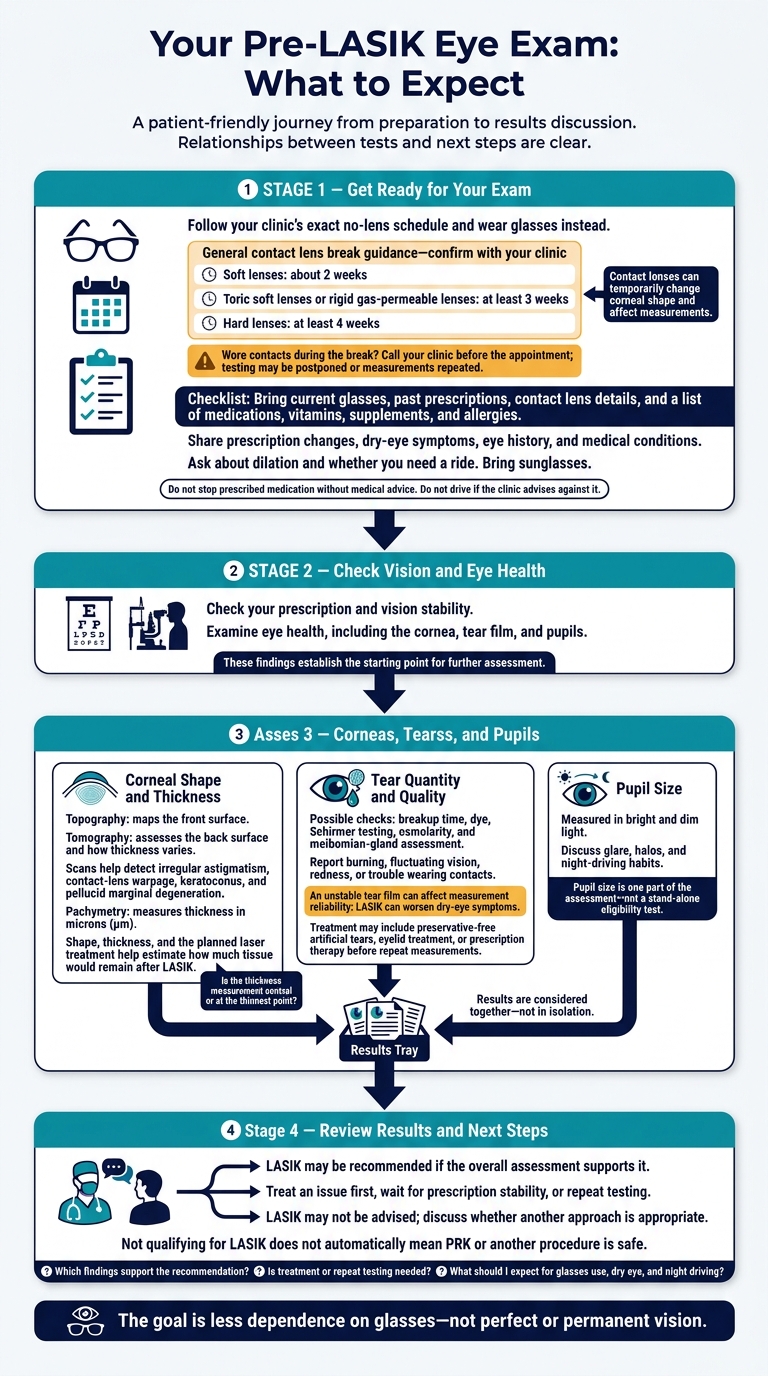
Your Pre-LASIK Eye Exam: What to Expect
Step 1: Get Ready for Your Exam
Follow Instructions for Contact Lens Wear
Contact lenses can temporarily change your cornea’s shape and throw off LASIK measurements. Follow your clinic’s exact no-lens schedule and wear glasses instead. The break lets your cornea return to its natural shape before mapping.
General guidance is about 2 weeks for soft lenses, at least 3 weeks for toric soft lenses or rigid gas-permeable lenses, and at least 4 weeks for hard lenses. Timing can vary by lens type, so confirm your schedule with your clinic.
If you wore contacts during the break, call before your appointment. Tell the clinic your lens type and the last date you wore them. Your clinician may postpone testing or repeat measurements later.
Bring Your Glasses and Health History
Bring your current glasses, past prescriptions, contact lens details, and a list of medications, vitamins, supplements, and allergies. Past prescriptions help your clinician check for changes. Jot down questions about expected vision, reading glasses, night driving, and recovery.
Be ready to discuss recent prescription changes, dry eye, eye disease, previous eye injuries or surgery, and any medical conditions or medicines that may affect healing or tear production.
Also note how often you use artificial tears and what causes discomfort – screens, wind, or dry indoor air, for example. These details help your clinician assess tear problems and healing risks. Do not stop prescribed medication without medical advice.
Plan for Possible Eye Dilation
Ask whether your eyes will be dilated, how long the appointment may take, and whether you should arrange a ride. Dilating drops can temporarily blur near vision and make your eyes more sensitive to light.
Bring sunglasses, and do not plan to drive if the clinic advises against it. Avoid scheduling an important visual task afterward.
sbb-itb-c87b093
Step 2: Test Your Vision and Eye Health
Check Your Prescription and Vision Stability
Your clinician checks your vision prescription and whether it has stayed stable. During LASIK, the laser reshapes your cornea using your prescription and a detailed map of your eyes. Your surgeon uses these measurements to assess whether LASIK is right for you. This sets the starting point for the rest of your exam.
Check Your Eye Structures
Your surgeon examines your cornea, tear film, and pupils to assess whether LASIK can safely correct your vision and help plan your treatment. The results may point to LASIK or another approach, such as PRK. Next, the exam measures your cornea’s shape and thickness, tear quality, and pupil size.
Step 3: Assess Your Corneas, Tears, and Pupils
After the basic exam, your clinician checks your corneas, tears, and pupils to help determine whether LASIK can be planned safely.
Map Corneal Shape and Measure Thickness
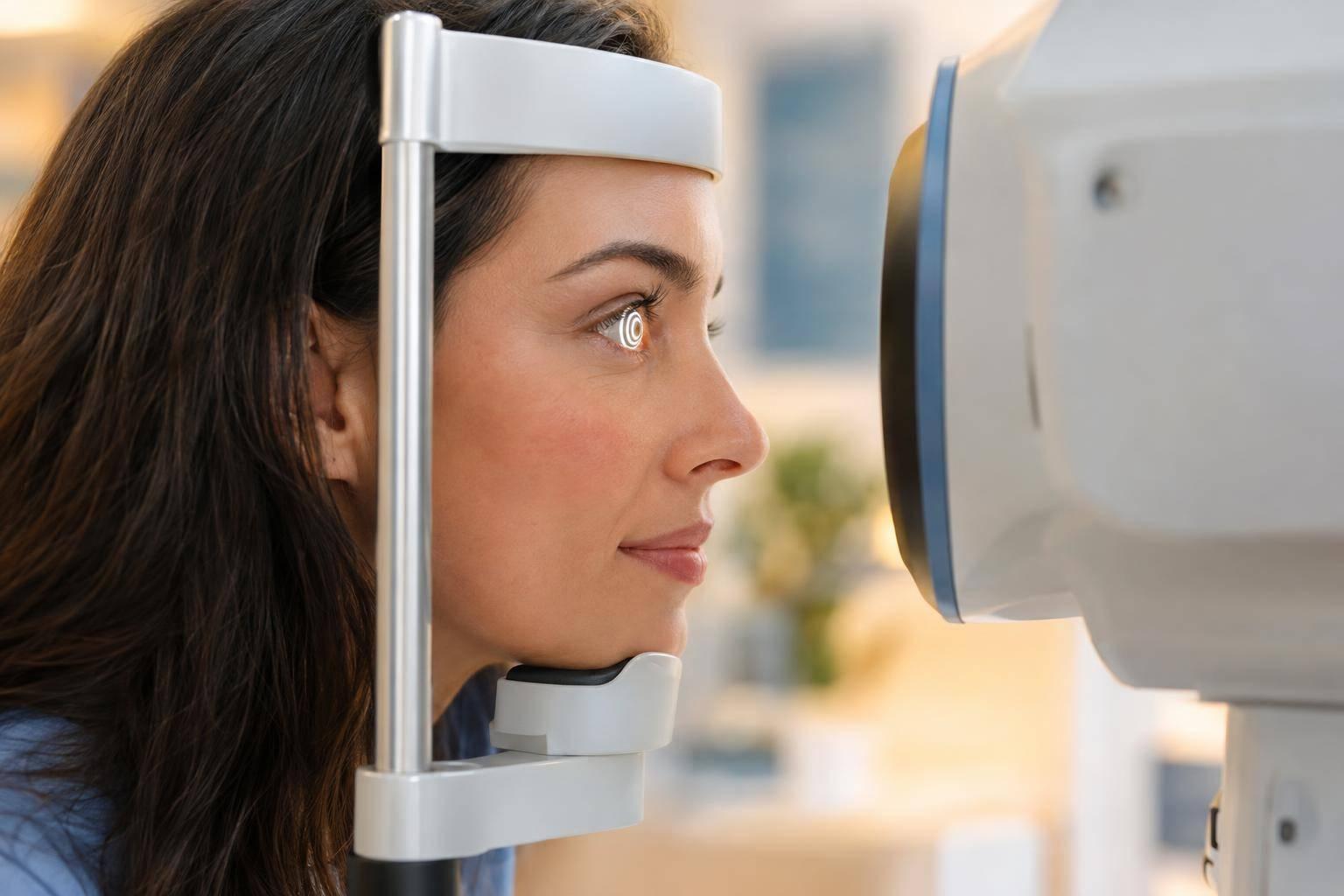
Corneal topography maps the front surface of your cornea. Tomography also measures the back surface and how thickness varies across the cornea. These scans help detect irregular astigmatism, contact-lens warpage, keratoconus, and pellucid marginal degeneration. They also help rule out corneas that are too irregular for LASIK.
Pachymetry measures corneal thickness in microns (µm), using an optical scan or a contact probe after your eye is numbed. Your surgeon uses this measurement to estimate how much tissue would remain after LASIK.
Thickness alone doesn’t tell the whole story. Your surgeon considers it alongside corneal shape and the planned laser treatment. Ask whether they’re using central thickness or the thinnest point.
Check Tear Quantity and Quality
Your clinician may check your tears using breakup time, dye, Schirmer testing, osmolarity, and a meibomian-gland assessment.
Tell them about burning, fluctuating vision, redness, or trouble wearing contact lenses. An unstable tear film or inflammation can make refraction and corneal measurements less reliable. LASIK can also worsen dry-eye symptoms.
Before repeating measurements, your doctor may recommend preservative-free artificial tears, eyelid treatment, or prescription therapy. Your tear film needs to be stable before final LASIK measurements.
Measure Pupils in Different Lighting
Your clinician measures pupil diameter in bright and dim light, often with a device. Larger pupils in dim light may expose more of the outer cornea, which can contribute to glare, halos, or problems driving at night.
Tell your surgeon about your night-driving habits. This helps them assess night-vision risks and plan treatment. Pupil size is one part of the assessment – not a stand-alone test of LASIK eligibility.
Conclusion: Understand Your Results and Next Steps
Understand Your Surgeon’s Recommendation
Your surgeon reviews prescription stability, vision with glasses or contacts, corneal shape and thickness, tear health, pupil size, and overall eye health. Together, these findings help determine whether to recommend LASIK, treat an issue first, or consider a different approach.
You may need to wait until your prescription is stable or more information is available. If the overall risk is too high, your surgeon may advise against LASIK. The goal is less dependence on glasses – not perfect or permanent vision.
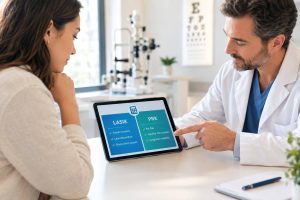
If LASIK isn’t suitable, your surgeon may discuss PRK or another vision-correction option. But not qualifying for LASIK doesn’t automatically mean another procedure is safe.
Review What Each Test Means
Your surgeon considers the test results together – not in isolation – to assess safety, healing risks, and your chances of a good visual outcome.
Discuss Your Results With Boulder Eye Surgeons
Use your results review with Boulder Eye Surgeons to clarify what comes next. Ask which findings support the recommendation and whether anything needs treatment or repeat testing. Also discuss what to expect for your vision, glasses use, dry-eye risk, and night-driving symptoms.
FAQs
How long must my prescription be stable before LASIK?
Your prescription should stay stable for at least 12 months before you consider LASIK. Boulder Eye Surgeons notes that large changes in your prescription can affect the procedure’s long-term success.
Can treating dry eye make me eligible for LASIK?
Treating dry eye may improve your LASIK eligibility if dryness affects your test results. An unstable tear film can make corneal maps and measurements less accurate. You may need treatment before your surgeon takes final measurements.
Chronic or severe dry eye may delay LASIK or rule it out. Your surgeon may suggest waiting or choosing another option. At Boulder Eye Surgeons, the team checks the health of your eye’s surface before planning treatment.
What if my LASIK test results are borderline?
Borderline results don’t automatically rule out vision correction, but LASIK may not be right for you. PRK may be safer because it avoids creating a corneal flap and preserves more of the cornea’s structural strength.
Your surgeon may repeat tests, request a specialist’s review, or first treat dry eye or changes in corneal shape caused by contact lenses. They’ll then weigh all the findings to choose the safest approach for your eyes.