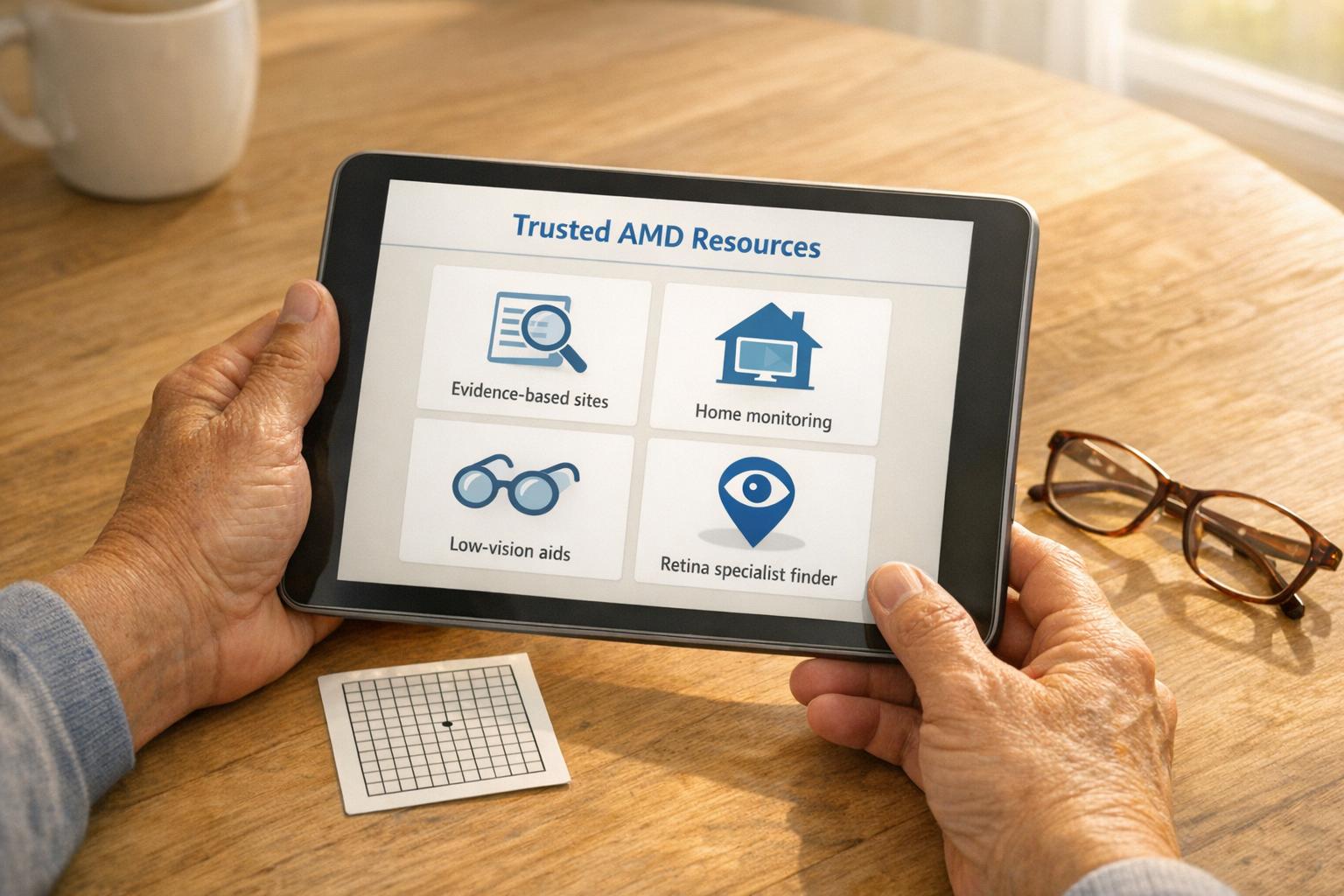
Finding reliable information about macular degeneration (AMD) can feel overwhelming, but it doesn’t have to be. Start with trusted sources like the National Eye Institute or the American Academy of Ophthalmology. These organizations share accurate, up-to-date information reviewed by experts.
Here’s a quick guide to help you navigate AMD resources effectively:
- Focus on .gov and .org websites: Federal agencies and nonprofit organizations offer unbiased, evidence-based materials.
- Check for peer-reviewed references: Look for studies like AREDS and AREDS2, which provide valuable insights on AMD treatments.
- Use support tools: Low-vision aids, FDA-approved apps, and monitoring devices can help manage AMD at home.
- Consult eye care professionals: Retina specialists provide tailored advice and connect you with additional resources.
Early detection is key. Regular eye exams, home monitoring tools, and credible information can help you stay ahead of AMD. For personalized care, discuss options with your eye doctor today.
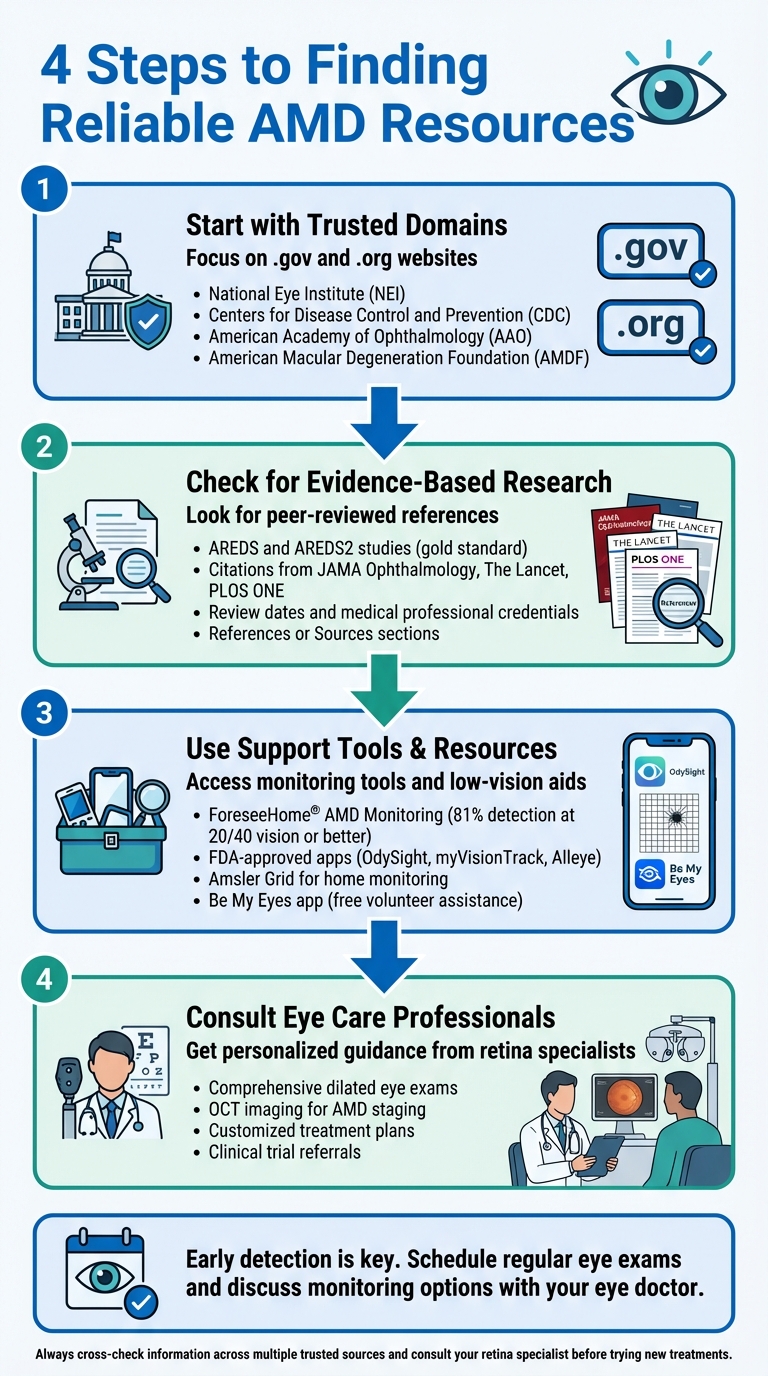
4-Step Guide to Finding Reliable Macular Degeneration Resources
Age Related Macular Degeneration (AMD) genes saving you vision. Is AMD Alzheimer’s of the eye?
Finding Trustworthy Organizations and Authorities
When looking for reliable information about macular degeneration, focus on resources from organizations with verified credentials. The most dependable sources often fall into two categories: government agencies with .gov domains and nonprofit organizations with .org extensions. These sources typically provide content reviewed by medical professionals, steering clear of commercial influences. Below, you’ll find examples of both types of organizations offering evidence-based support for AMD.
Government agencies like the National Eye Institute (NEI) and the Centers for Disease Control and Prevention (CDC) are leaders in providing accurate AMD information. The NEI, part of the National Institutes of Health, emphasizes its mission as:
"The mission of the National Eye Institute is to eliminate vision loss and improve quality of life through vision research."
These federal resources are accessible through secure HTTPS connections, ensuring a safe way to gather health information. For additional questions, the NEI offers information specialists available at 800-680-2578, providing assistance in both English and Spanish.
Nonprofit and Government Institutions
Federal agencies like the CDC’s Vision Health Initiative and the American Academy of Ophthalmology (AAO) offer regularly updated, expert-reviewed resources on AMD. These materials are free from commercial bias, making them trustworthy sources of information.
In addition to federal agencies, nonprofit organizations provide tailored resources and direct support for patients.
Foundations Focused on Macular Degeneration
Nonprofit foundations dedicated to AMD research and support go beyond the data provided by government institutions. For example:
- The BrightFocus Foundation supports global research and ensures its content is "expert-vetted" by specialists. They also host webinars and podcasts featuring top researchers who share the latest findings in the field.
- The American Macular Degeneration Foundation (AMDF) offers practical tools like the "Eat Right for Your Sight" cooking series and guides on using digital magnifiers, helping individuals adapt to vision challenges.
- Prevent Blindness complements these efforts by sharing patient stories, advocating for vision health, and providing research-backed information.
When evaluating any foundation, check if they cite peer-reviewed medical journals, such as JAMA Ophthalmology or The Lancet, and whether they reference trusted federal entities like the NEI. This ensures their alignment with established medical science and enhances their credibility.
Checking the Credibility of Online Content
When searching for reliable health information, it’s essential to assess the accuracy of the resources you find. Being able to tell the difference between well-supported facts and unverified claims can have a big impact on your health decisions.
Look for Evidence-Based Information
Trustworthy websites back up their claims with specific references to clinical trials and peer-reviewed studies. For example, the Age-Related Eye Disease Studies (AREDS and AREDS2) are considered the gold standard for research on nutritional interventions for AMD. Reliable sources often cite these pivotal studies when discussing supplements. Additionally, check for citations from respected medical journals like Ophthalmology, The Lancet, or PLOS ONE, typically found in a "References" or "Sources" section.
Pay attention to who reviews the content. For instance, Cleveland Clinic emphasizes that their health articles are:
"based on evidence-backed information and review by medical professionals to ensure accuracy, reliability, and up-to-date clinical standards"
Reputable websites usually display the review dates and credentials of contributors, such as ophthalmologists or retina specialists, to confirm the information is accurate and current. Once you’ve verified the details, cross-check them with other trusted sources to ensure consistency.
Cross-Check Information Across Multiple Sources
Even after confirming evidence-based details, comparing information across multiple reputable sources strengthens its credibility. Trusted organizations like the National Eye Institute, the American Academy of Ophthalmology, or MedlinePlus are excellent places to cross-reference claims.
Be cautious with information from social media groups or forums. The American Macular Degeneration Foundation advises:
"You will get a wide mix of information in these [Facebook] groups, but there is no vetting process for what is posted, so you will have to discern what is misinformation and what is helpful"
Before trying any new supplements, medications, or assistive devices, consult your retina specialist for professional guidance.
Reliable websites often include disclaimers to clarify their role, such as this one from BrightFocus Foundation:
"The information provided here is a public service… and is not intended to constitute medical advice. Please consult your physician for personalized medical, dietary, and/or exercise advice"
Stay alert for red flags, like online diagnostic tools claiming to replace professional exams. Research to Prevent Blindness warns:
"Do not use screen images to perform the [Amsler Grid] test as they are not to scale"
For home monitoring, always use a printed version of the Amsler Grid, and if you notice any concerning changes in your vision, schedule an in-person evaluation with an eye care professional.
sbb-itb-c87b093
Using Support Services and Tools
There are many practical resources available to help maintain independence and keep track of your vision health from home. These range from simple magnifiers to advanced monitoring systems that can alert you to changes between doctor visits.
Low Vision Aids and Monitoring Tools
Low vision aids come in various forms to assist with everyday tasks. Optical tools like handheld magnifiers and telescopic glasses can help with reading and recognizing faces, while electronic tools such as video magnifiers and text-to-speech software provide adjustable contrast and brightness for longer, more demanding activities.
Monitoring devices are designed to detect changes in your vision between appointments. For example, the FDA-approved ForeseeHome® AMD Monitoring Program uses artificial intelligence to identify early signs of wet AMD. Impressively, it detects conversion at 20/40 vision or better in 81% of patients, and Medicare covers it for those with intermediate AMD who are at risk.
There are also prescription-based smartphone apps like OdySight, myVisionTrack, and Alleye that monitor near visual acuity, contrast sensitivity, and central visual fields. These FDA-approved apps can notify your doctor if your vision declines, so it’s worth discussing their use with your retina specialist.
Non-optical aids can also make daily life easier. Items like high-contrast cutting boards, talking thermometers, and textured labels are practical tools for maintaining independence. Additionally, apps such as the free Be My Eyes connect you with sighted volunteers via your smartphone, offering real-time assistance for tasks like reading labels or navigating unfamiliar spaces.
Beyond technology, community resources and financial support programs can also play a key role in helping you manage AMD effectively at home.
Support Programs and Associations
Organizations like Lighthouse Guild and the Macular Degeneration Association offer more than just medical information – they provide valuable community support. These groups host educational webinars, peer support programs like "Community Circle", and even audio reading services such as Choice Magazine Listening. The National Library Service supports individuals with vision loss through its "That All May Read" program, offering free access to braille materials and audiobooks.
Financial assistance is another important resource. Programs like EyeCare America provide free eye exams for eligible seniors, while the Social Security Administration offers benefits for individuals who are legally blind. The BrightFocus Foundation, which has funded over $300 million in research grants over the past 50 years, also maintains directories for prescription assistance programs. For families managing care, tools like Lotsa Helping Hands allow coordination through private group calendars.
To create a personalized rehabilitation plan or get training on specific devices, reach out to your eye care provider for a referral. These resources can help you navigate the challenges of AMD with greater confidence and independence.
Consulting with Eye Care Professionals
Online resources and support programs can be helpful, but when it comes to managing macular degeneration, your eye care provider is your go-to expert. They can take general information and turn it into personalized advice tailored to your specific condition – because the progression of AMD (age-related macular degeneration) is different for everyone.
How Retina Specialists Can Help
Retina specialists play a crucial role in diagnosing and managing AMD. Using advanced tools like Optical Coherence Tomography (OCT) and comprehensive dilated eye exams, they can determine the stage of your AMD – whether it’s early, intermediate, or late – and whether it’s the dry or wet form. This is especially important because early-stage AMD often has no symptoms, and only professional exams can catch it before irreversible vision loss occurs.
Once diagnosed, your specialist can provide customized care. For instance, many specialists use resources like the National Eye Institute’s "Talk with Your Doctor" guide, which includes tools like symptom trackers and question lists to help you have productive conversations during appointments. They can also help you understand if treatments like anti-VEGF injections are suitable for you or if the AREDS2 vitamin formula might help, depending on your AMD stage.
Retina specialists also connect patients with additional support. This includes referrals to vision rehabilitation programs or low-vision specialists who can help you stay independent. If you’re curious about new treatments, they can guide you toward clinical trials exploring options like stem cell transplants or gene therapy.
For those in need of trusted care, Boulder Eye Surgeons (https://bouldereyesurgeons.com) provides comprehensive retina services and offers educational resources tailored to your specific diagnosis and AMD stage.
Before your next appointment, take some time to prepare questions. Consider asking about your AMD stage, warning signs to watch for, tools for monitoring your condition, and potential dietary changes that could be helpful.
Conclusion
When seeking reliable information about macular degeneration, start with official sources like the National Eye Institute and reputable organizations such as the American Macular Degeneration Foundation. These resources provide evidence-based content grounded in studies like AREDS and AREDS2, offering a solid foundation for making informed care decisions.
Cross-check information from trusted sources and ensure any supplement recommendations align with the official AREDS formula. As MedlinePlus emphasizes, "Early detection of vision changes is important because the sooner you are treated, the better your outcome".
While credible information is essential, regular dilated eye exams and home monitoring tools, such as the Amsler grid, play a critical role in detecting early, symptomless changes. Combining these practices with advice from your eye care provider ensures a well-rounded approach to managing your eye health.
Prepare informed questions for your appointments, focusing on your AMD stage, treatment options, and lifestyle adjustments. The National Eye Institute reminds us, "Getting older doesn’t have to mean losing your vision". Use this knowledge to create a proactive care plan tailored to your needs.
Don’t delay – schedule a comprehensive eye exam, utilize proven monitoring tools, and consult a retina specialist for personalized guidance. If you’re in the Boulder, CO area, consider reaching out to Boulder Eye Surgeons for expert care and support.
FAQs
Where can I find trustworthy information about macular degeneration?
For trustworthy information on age-related macular degeneration (AMD), start with reputable organizations like the National Eye Institute (NEI), the Centers for Disease Control and Prevention (CDC), and the American Macular Degeneration Foundation (AMDF). These organizations offer reliable, up-to-date insights on AMD, covering symptoms, risk factors, treatment options, and practical advice for managing the condition.
You can also explore resources like MedlinePlus, which provides straightforward explanations, and the BrightFocus Foundation, known for its user-friendly guides tailored to patients. Relying on these well-established platforms ensures you’re accessing accurate and useful information to better understand and manage AMD.
How can I tell if a macular degeneration resource is trustworthy?
To assess whether a macular degeneration resource is reliable, start by examining its source. Prioritize information from well-known organizations such as non-profits, government entities, or respected medical institutions that focus on eye health. Examples of trusted sources include the American Macular Degeneration Foundation, the National Eye Institute, and the American Academy of Ophthalmology. These organizations are known for offering scientifically reviewed, evidence-based content.
Also, check the publication date to ensure the information reflects the latest medical knowledge, as guidelines can evolve. Reliable resources typically reference peer-reviewed studies or clinical recommendations and are clear about their mission and funding sources. By keeping these criteria in mind, you can confidently rely on accurate information to make informed health decisions.
What are the best tools to track macular degeneration at home?
You can keep an eye on macular degeneration at home with tools like the Amsler grid. This simple grid, resembling graph paper with a dot in the center, is designed to detect vision changes. If you spot wavy lines, blurred areas, or missing sections while using it, these could indicate disease progression – something worth discussing with your eye care provider.
Another practical approach is keeping a vision journal. By jotting down any changes in your eyesight over time, you can monitor patterns and stay on top of your eye health. Regular tracking like this allows for quicker responses to potential issues.
For any concerns about your vision, reach out to a trusted provider, such as Boulder Eye Surgeons, for personalized care and expert advice on managing macular degeneration.