
Eye surgery recovery, especially after procedures like cataract surgery, requires careful attention to ensure proper healing and reduce risks. While most patients experience improved vision within 24–48 hours, full recovery typically takes 4–8 weeks. Here’s what you need to know:
- First 48 Hours: Rest, avoid strenuous activities, and protect your eye with a shield while sleeping. Limit screen time and avoid driving until cleared by your doctor.
- Eye Drops: Use prescribed drops (antibiotics, steroids, NSAIDs) correctly to prevent infection and reduce inflammation. Wash hands before application and wait 5 minutes between different drops.
- Protect Your Eye: Avoid rubbing, touching, or exposing your eye to water, dust, or makeup. Wear sunglasses outdoors to shield against UV rays and irritants.
- Physical Activity: Refrain from heavy lifting, bending, or high-impact exercise for at least two weeks. Avoid swimming or hot tubs for 3–8 weeks.
- Warning Signs: Contact your doctor immediately if you experience severe pain, sudden vision loss, yellow/green discharge, or a fever over 100.4°F.
Key Tip: Follow your doctor’s instructions and attend all follow-up appointments to monitor healing and address potential issues.
This step-by-step guide ensures a safe recovery and long-term eye health.
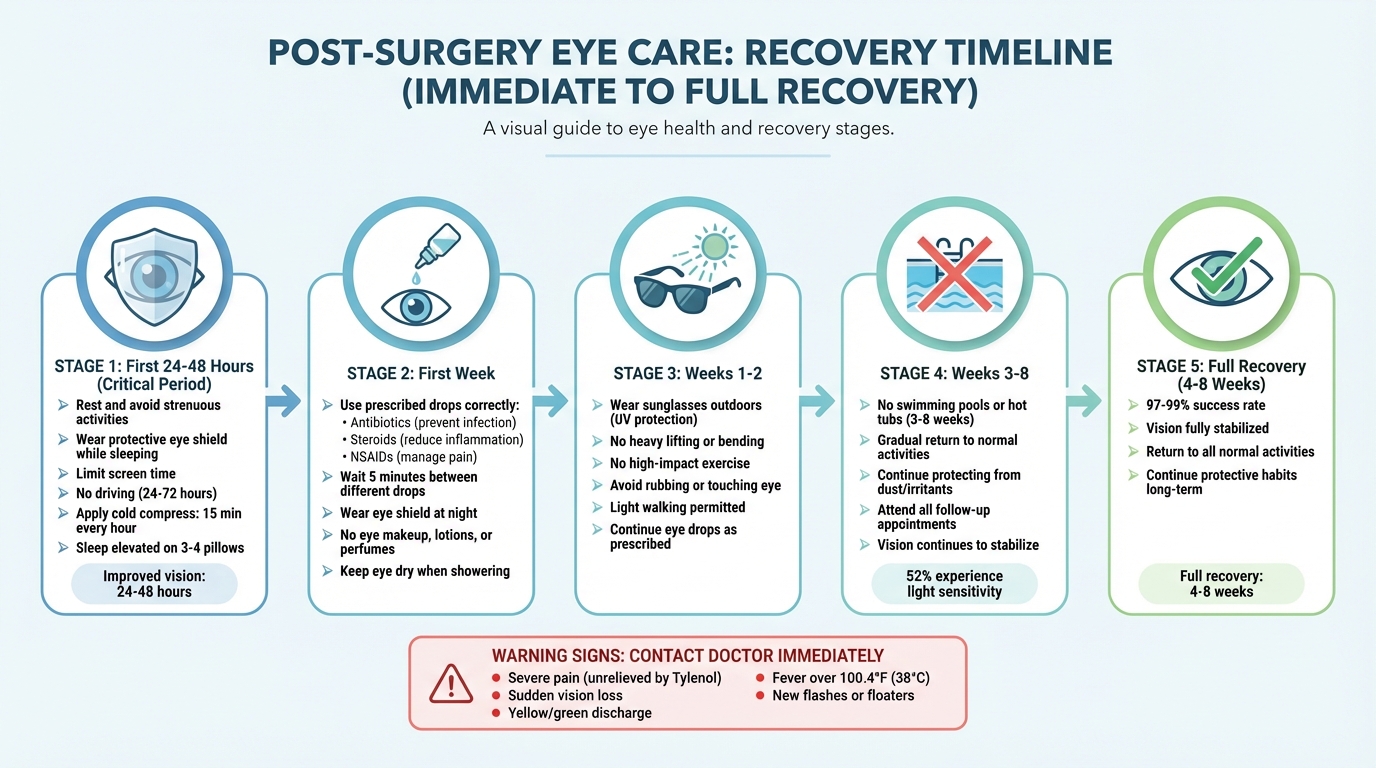
Post-Surgery Eye Care Recovery Timeline: First 48 Hours to 8 Weeks
Cataract Surgery Recovery: What No One Warns You About
sbb-itb-c87b093
First 24-48 Hours After Surgery
The first couple of days after eye surgery are critical for your recovery. During this time, your eye is especially sensitive, and how you care for it can make a big difference. Make sure to follow your surgeon’s instructions carefully to help your eye heal properly.
Rest and Eye Protection
Your eye needs time to adjust and begin healing after surgery. Avoid any strenuous activities – like heavy lifting or bending – for at least 48 hours, as these can increase eye pressure and interfere with the healing process.
Getting enough sleep is also crucial. For the first week, try to sleep on your back with your head elevated using 3–4 pillows. This position helps reduce swelling and minimizes the risk of rolling over onto your surgical eye. To protect your eye while you sleep or nap, wear the shield provided by your surgeon, especially during the first 24 hours.
Limit screen time during these early days, as it can strain your eyes and slow down recovery. To reduce swelling, you can apply a cold compress for 15 minutes every hour during the first three days. Also, avoid driving for at least 24 to 72 hours, or until your vision stabilizes.
How to Use Your Eye Drops
Your surgeon will likely prescribe a combination of eye drops to aid your recovery, including antibiotics (to prevent infection), steroids (to reduce inflammation), and NSAIDs (to manage pain and swelling). Proper application is key:
- Wash your hands thoroughly with soap and water.
- Tilt your head back or lie down, then gently pull your lower eyelid down to create a small pocket.
- Place one drop into the pocket, being careful not to touch your eye or the surrounding area with the dropper to avoid contamination.
- After applying the drop, close your eye gently and press a finger on the inner corner (near your nose) for about one minute. This technique, called "punctal occlusion", helps the medication stay in your eye for better absorption.
- If you’re using multiple types of drops, wait at least 5 minutes between each one to allow the first medication to absorb fully.
"Learn how to use eye drops before the procedure." – Dr. Nandini Venkateswaran, Cataract Surgeon, Harvard-affiliated Massachusetts Eye and Ear
If your surgeon prescribes an ointment, apply a small, rice-sized amount into the lower eyelid pocket using a clean Q-tip. Avoid using your finger, as it could apply too much pressure on the surgical area. For extra comfort, store preservative-free artificial tears in the refrigerator – they can provide soothing relief when needed.
Next, focus on protecting your eye from irritants and potential injuries.
Preventing Eye Irritation and Injury
To protect your healing eye, avoid rubbing, touching, or scratching it. Rubbing can disturb surgical flaps or sutures and lead to complications. If you feel irritation, take an antihistamine like Benadryl as directed instead of rubbing your eye.
Keep your eye dry for the first 24 hours. When showering, close your eyes tightly to prevent water, soap, or shampoo from coming into contact with your surgical eye.
Stay away from dusty, smoky, or dirty environments that could expose your eye to irritants or bacteria. When outdoors, wear large sunglasses or a sun shield to protect against UV rays, glare, and airborne particles. Additionally, avoid using eye makeup, lotions, creams, or perfumes near your face for at least two weeks.
For pain relief, use Acetaminophen (Tylenol) as directed. Avoid nonsteroidal anti-inflammatory drugs like ibuprofen or naproxen unless your surgeon specifically advises otherwise. If you notice sudden vision loss, severe pain that doesn’t improve with Tylenol, a fever over 100.4°F (38°C), or yellow or green discharge from your eye, contact your healthcare provider immediately.
Protecting Your Eyes During Recovery
After the first 48 hours, it’s important to keep safeguarding your eyes by making thoughtful adjustments to your daily habits. Avoiding physical contact and exposure to potential irritants is key to ensuring proper healing.
When to Wear Shields and Sunglasses
Protective shields and sunglasses serve distinct purposes at different times. At night, use the rigid plastic eye shield your surgeon provided for at least a week while you sleep. This barrier prevents accidental rubbing, poking, or pressure on your eye during sleep. Even if you roll over, the shield will protect your healing eye.
During the day, sunglasses become your main line of defense. They shield your eyes from bright light, UV rays, wind, and dust. Light sensitivity is common after eye surgery, affecting up to 52% of patients. Start wearing sunglasses immediately after your procedure and keep using them whenever you’re outdoors. Once your doctor clears you to drive – usually 24 to 72 hours post-surgery – wear them while driving as well. Opt for large, wrap-around styles that offer full coverage.
"Wear large sunglasses or a sun-shield ANY time you are exposed to the sun to minimize scarring." – Dr. Kyle Cox, Oculofacial Surgeon
In addition to protective eyewear, adapting your physical activities is a critical part of recovery.
Physical Activity Restrictions
Certain movements can increase intraocular pressure. Activities like bending at the waist, lifting heavy objects, or doing yoga inversions can cause blood to rush to your head, which may interfere with healing. Instead, bend at your knees to pick things up and keep your head elevated.
Avoid high-impact exercise for a while. Running, tennis, basketball, weightlifting, and similar activities involve sudden, jarring motions that could strain your eye. These should be avoided for at least two weeks. However, light activities, such as a 20-minute leisure walk, are generally safe and can often be started the day after surgery.
Be cautious with water-based activities. Swimming pools, hot tubs, lakes, and oceans can harbor bacteria that pose a risk to your healing eye. Stay out of the water for at least three to eight weeks, depending on the type of surgery you had. Even submerging your head in the bathtub is off-limits during this time. Most patients fully recover from cataract surgery within eight weeks, at which point your surgeon can let you know when it’s safe to return to water activities.
Watch out for environmental irritants. Activities like gardening, dusting, or spending time in smoky or windy conditions can expose your eyes to airborne particles that might cause irritation or infection. Postpone these tasks until your follow-up appointments confirm that your eye has healed enough to handle such exposure.
Once you’ve adjusted your physical activities, maintaining good hygiene will further protect your recovery.
Keeping Your Eyes Clean
Always wash your hands before touching your eye area. This simple habit helps prevent bacteria from reaching the surgical site.
Be gentle when cleaning around your eyes. If you notice any crusting, use a damp, clean washcloth to wipe it away carefully. If your surgeon has prescribed an ointment, apply it sparingly with a clean Q-tip instead of your fingers to avoid putting too much pressure on your eye or disturbing any sutures.
Adjust your face-washing routine for the first week. Instead of splashing water on your face, use a damp washcloth to clean around your eyes while keeping them closed. After 24 hours, you can shower, but keep your eyes tightly closed and avoid letting the shower stream hit your face directly. When washing your hair, tilt your head back – as you would at a salon – so the water flows away from your face.
Avoid cosmetics and personal care products near your operated eye. Eye makeup, such as mascara, eyeliner, and eyeshadow, can harbor bacteria and should be avoided for at least one to two weeks. Depending on your procedure, some surgeons may recommend waiting up to three weeks. Similarly, keep face washes, lotions, creams, and perfumes away from the surgical area to prevent irritation. When you’re ready to resume using makeup, replace old brushes and sponges with new ones to minimize the risk of infection.
Handling Discomfort and Warning Signs
Once you know how to protect your eyes after surgery, the next step is understanding how to handle discomfort and recognize potential warning signs during recovery.
Managing Pain and Dryness
It’s normal to feel a gritty or scratchy sensation in your eye, often compared to having sand in it. Other common symptoms include watery eyes, mild tenderness, and temporary blurriness, which typically improve as your eye heals.
For mild pain, acetaminophen (Tylenol) is a safe option since it eases discomfort without increasing the risk of bleeding. Avoid NSAIDs like ibuprofen or naproxen unless your surgeon specifically gives the go-ahead, as these could interfere with the healing process.
Dryness is another frequent issue, but preservative-free artificial tears can help. Products like Refresh or Systane are good choices, and you can use them as often as needed throughout the day. For added relief, try storing them in the refrigerator.
Swelling and bruising are also common in the first few days. To reduce swelling, apply ice packs for 15 minutes every hour during waking hours for the first 72 hours. After three days, switch to warm compresses to improve blood flow and promote healing. Sleeping with your head elevated on three or four pillows can also help minimize swelling.
Keep an eye on these symptoms, and if they worsen, refer to the warning signs outlined below.
Signs of Complications
While most recoveries are smooth, it’s essential to be aware of symptoms that may indicate complications. Cataract surgery has a high success rate, improving vision in about 97% of patients. Serious complications, such as retinal detachment, occur in only about 2 in 1,000 cases, and infections are even rarer, affecting fewer than 1 in 1,000 people. That said, you should know what to watch for.
Here’s a quick guide to distinguishing between normal recovery symptoms and those that require immediate attention:
| Symptom Type | Normal/Expected | When to Call Your Doctor |
|---|---|---|
| Pain | Mild tenderness, gritty feeling | Severe pain, headaches unrelieved by Tylenol |
| Vision | Blurriness, glare, halos | Sudden vision loss, new flashes or floaters |
| Discharge | Watery eyes, pink-tinted tears | Yellow or green discharge, thick crusting |
| Physical | Mild swelling, bloodshot appearance | Fever over 100.4°F (38°C), extreme swelling preventing eye opening |
If you notice any of the warning signs above, contact your ophthalmologist right away. Sudden vision loss, new flashes of light, or floaters could signal retinal detachment. Severe pain that doesn’t improve with over-the-counter medication, yellow or green discharge, or a fever of 100.4°F (38°C) or higher might point to an infection. Additionally, a rapidly forming, firm hematoma or bleeding that doesn’t stop after applying pressure for 10 minutes needs immediate medical evaluation.
"If you experience problems with your vision, ongoing or worsening discomfort or pain, swelling, or redness, or loss of vision, report these to your doctor immediately." – NVISION Centers
If something feels off, don’t hesitate to call your doctor. It’s always better to address concerns sooner rather than risk complications.
Follow-Up Visits and Long-Term Eye Health
Healing your eyes after surgery isn’t just about the initial recovery period – it’s about ensuring they stay healthy and your vision remains clear for years to come. Regular check-ups and developing protective habits play a big role in this process.
Attending Your Follow-Up Appointments
After your surgery, your doctor will schedule follow-up visits to monitor your healing progress. Even if your vision feels perfect and you’re not experiencing any pain, these appointments are crucial. Problems can sometimes arise without noticeable symptoms. Typically, the schedule includes a visit within 24–48 hours after surgery, another at 1–2 weeks, a check at the 1-month mark, and possibly a final evaluation 3–6 months later, especially for procedures like LASIK.
During your first post-op visit, your surgeon will remove protective dressings, check for any signs of infection, and evaluate your initial visual response. Subsequent visits focus on how well your incisions are healing, fine-tuning your eye drop regimen, and determining when your vision has stabilized enough to update your eyeglass prescription, if needed. It’s a good idea to have someone drive you to these early appointments since your vision may still be blurry or affected by dilating drops. If you ever experience sudden vision loss, severe pain, or notice yellow or green discharge, contact your surgeon immediately. These follow-ups are essential for laying a strong foundation for your long-term eye health.
At Boulder Eye Surgeons, personalized follow-up care is a cornerstone of smooth recovery and maintaining your vision for the future.
Building Protective Habits
Follow-up care is only part of the equation – your daily habits also play a key role in preserving the results of your surgery.
For instance, wearing sunglasses on bright days for up to a year after surgery helps protect your eyes from glare and lowers the risk of scarring. Following your surgeon’s recovery instructions is just as important, as it ensures your healing tissues aren’t disturbed. If you’re dealing with dryness, preservative-free artificial tears can provide relief, and many patients find that storing them in the refrigerator makes them even more soothing.
Good hygiene is another must. Clean your eyelids and lashes gently with a warm, damp washcloth, and always wash your hands before touching your eyes. Avoid swimming pools and hot tubs for at least 4 to 8 weeks to reduce the risk of infection. Finally, what you eat matters, too. A diet rich in lean proteins and leafy greens supports eye health, while cutting back on sugary foods helps protect your eye’s blood vessels.
Conclusion
Recovering successfully is straightforward when you stick to the essentials: use your prescribed eye drops, shield your eyes with protective gear like sunglasses, and avoid any activities that strain your vision. With a success rate ranging from 97% to 99%, most patients experience outstanding results. However, achieving those results relies heavily on carefully following your surgeon’s instructions.
"It is critical to follow [the surgeon’s] post-operative instructions carefully to ensure an expedient and successful recovery." – Dr. John Kirk, Eye Surgeon, Kirk Eye Center
Be alert to any warning signs, such as sudden vision loss, severe pain that doesn’t improve with Tylenol, or unusual discharge. If you notice any of these, contact your surgeon right away.
Attending all follow-up appointments is equally important. These visits allow your surgeon to monitor your healing, adjust medications if necessary, and address potential complications early on. Together, these steps form a well-rounded care plan to support your recovery.
Adopting good habits – like wearing sunglasses outdoors, maintaining proper hygiene, and protecting your eyes while sleeping – can further aid healing and safeguard your vision in the long run. Full recovery typically takes about four to eight weeks.
FAQs
What can I do to relieve eye irritation and dryness after surgery?
To relieve eye irritation and dryness after surgery, use artificial tears or lubricating eye drops as prescribed by your doctor. These drops help keep your eyes hydrated and more comfortable as they heal. Be careful not to rub or press on your eyes, as this can lead to further irritation or potential complications.
Protecting your eyes from bright light by wearing sunglasses can also make a big difference. If your surgeon approves, applying warm compresses might help boost blood flow and ease discomfort. Stick closely to your surgeon’s post-operative care guidelines, and always maintain good hygiene – like washing your hands before applying eye drops – to reduce the risk of infection.
If your irritation or dryness doesn’t improve or seems to get worse, reach out to your healthcare provider right away. Prompt attention can ensure proper treatment and help avoid any further issues.
What should I avoid doing while recovering from eye surgery?
During your recovery from eye surgery, taking steps to protect your eyes is essential. Avoid activities like heavy lifting, intense workouts, or bending over with your head below your waist, as these can raise pressure in your eyes. It’s also important to steer clear of swimming or using hot tubs to minimize the chance of infection.
Limit tasks that may strain your eyes, such as prolonged screen use or reading, particularly in the first few days post-surgery. Be sure to follow your surgeon’s guidance closely to promote healing and safeguard your vision.
What signs of complications after eye surgery should prompt me to call my doctor?
If you notice severe pain, sudden changes in vision, significant or ongoing bleeding, or persistent redness that doesn’t improve, contact your doctor immediately. These could indicate complications that need urgent medical attention.
Keep an eye out for other concerning symptoms, such as:
- Increasing discomfort or swelling
- Seeing flashes of light or new floaters
- Any unusual discharge from the eye
When in doubt, don’t hesitate to reach out to your healthcare provider. Acting quickly can make a big difference in your recovery and help safeguard your vision.