UV radiation is a major contributor to cataracts, with up to 20% of cases linked to sun exposure. Cataracts, a clouding of the eye’s lens, affect vision by scattering light, leading to symptoms like blurry vision, dull colors, and glare sensitivity. While aging is the leading cause, exposure to UVB and UVA rays accelerates the damage through oxidative stress, breaking down proteins in the lens.
Here’s what you need to know:
- UVB rays are more energetic but don’t penetrate deeply, primarily causing cortical and subcapsular cataracts.
- UVA rays penetrate deeper into the lens, contributing to nuclear cataracts.
- By age 20, most people have already absorbed 80% of their lifetime UV exposure.
Protect Your Eyes:
- Wear sunglasses with 100% UVA and UVB protection (look for labels like “UV400”).
- Pair sunglasses with a wide-brimmed hat to reduce UV exposure by up to 50%.
- Avoid direct sunlight during peak UV hours (10 a.m. to 4 p.m.).
- Consider UV-blocking contact lenses and eat antioxidant-rich foods like leafy greens.
Early detection matters. Schedule regular eye exams, especially if you’re over 40 or have high UV exposure from outdoor work or high-altitude living. Cataracts develop slowly, but symptoms like cloudy vision or halos around lights shouldn’t be ignored. Protecting your eyes now can reduce risks later.
Dr. Riordan Discusses UV Rays & Cataracts on News4Jax
sbb-itb-c87b093
How UV Radiation Causes Cataracts
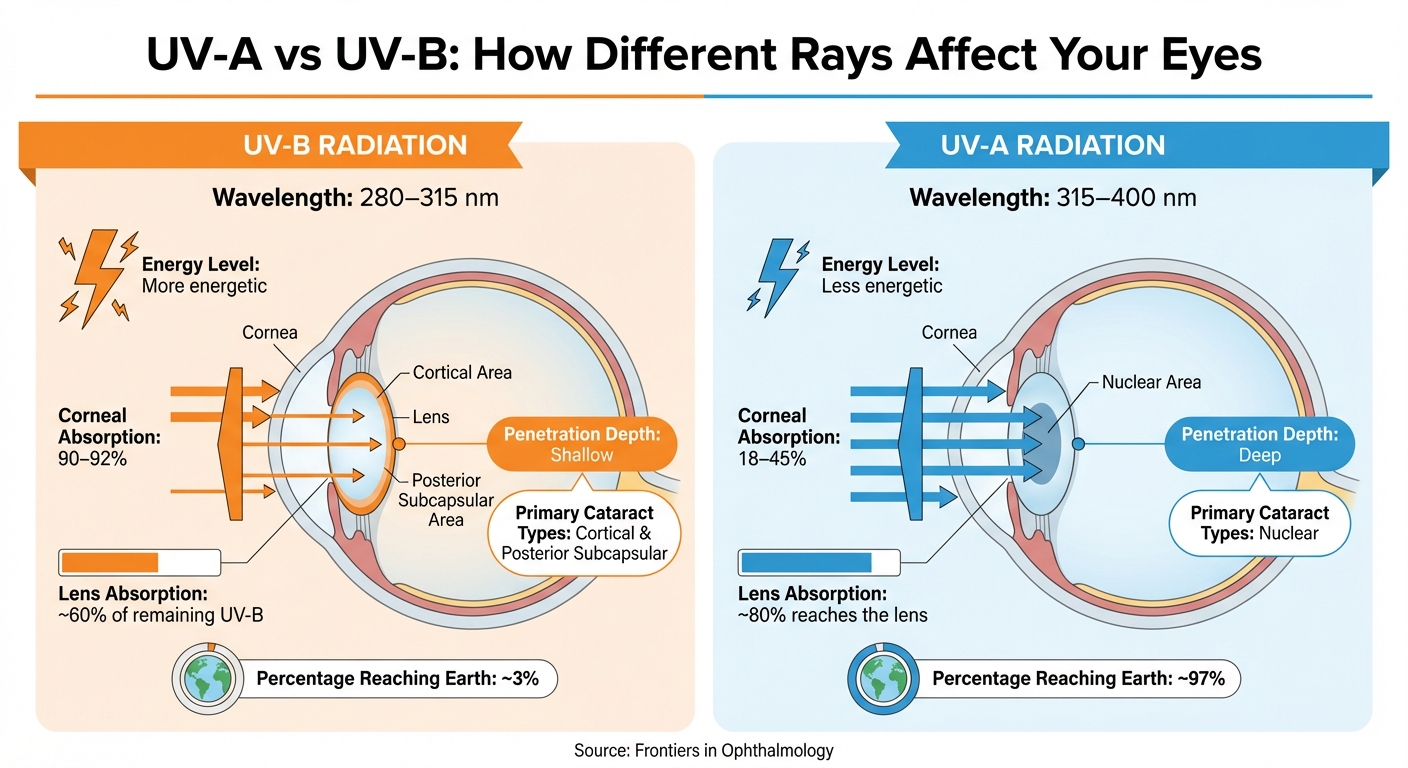
UV-A vs UV-B Radiation Effects on Eye Lens and Cataract Types
The lens in your eye acts as a natural filter, blocking harmful UV light to protect the retina. But this protection comes at a price – over time, the lens accumulates damage. UV radiation triggers photochemical reactions that generate reactive oxygen species (ROS), which harm the crystallin proteins in the lens. This damage leads to protein clumping and cross-linking, making the proteins insoluble. The result? Light scattering and the cloudiness we recognize as cataracts.
When you’re young, your lenses rely on kynurenine metabolites to absorb and dissipate UV energy safely. However, with age and prolonged UV exposure, this defense weakens. These natural UV filters can even turn into photosensitizers, producing more ROS. On top of that, the lens’s ability to defend itself declines by about 12% every decade, leaving it increasingly vulnerable.
UV-A and UV-B Rays: What’s the Difference?
Not all UV rays are created equal, and they don’t affect your eyes in the same way. Around 97% of the UV radiation that reaches Earth is UV-A, while only about 3% is UV-B. Here’s how they differ:
- UV-B Radiation (280–315 nm): UV-B rays are more energetic but don’t penetrate deeply. The cornea absorbs 90%–92% of these rays, and about 60% of the remaining light is absorbed by the outer layers of the lens. UV-B exposure is mainly linked to cortical and posterior subcapsular cataracts.
- UV-A Radiation (315–400 nm): UV-A rays penetrate much deeper. The cornea only absorbs 18%–45% of UV-A light, allowing nearly 80% to reach the lens, including the dense, oxygen-deprived nucleus. This deep penetration is primarily associated with nuclear cataracts.
| UV Type | Wavelength | Corneal Absorption | Lens Absorption | Primary Cataract Type |
|---|---|---|---|---|
| UV-B | 280–315 nm | 90%–92% | ~60% (of passing UV-B) | Cortical, Subcapsular |
| UV-A | 315–400 nm | 18%–45% | ~80% | Nuclear |
Source: Frontiers in Ophthalmology
These variations in penetration and absorption lead to different oxidative processes that damage the lens over time.
Oxidative Stress and Protein Breakdown in the Lens
The lens nucleus faces additional challenges beyond UV exposure. It’s made up of aged, organelle-free cells that operate in a low-oxygen environment, making them particularly prone to oxidative stress. According to the National Eye Institute:
"The oldest cells in the lens are not only devoid of the organelles that keep most other cells alive and functioning, they also get little to no oxygen. So how can they suffer from oxidative stress? … UV light may provide an answer."
In this oxygen-deprived setting, UV light can step in to trigger oxidative reactions through glycation. UV-A radiation sets off a chain reaction involving amino acid derivatives like kynurenines, which ultimately leads to the formation of advanced glycation end products (AGEs). These AGEs irreversibly alter lens proteins. Normally, the antioxidant glutathione (GSH) would neutralize ROS, but aging and UV exposure deplete GSH levels. This depletion accelerates protein aggregation, contributing to brunescence – the yellowing or browning of the aging lens.
The World Health Organization estimates that up to 20% of cataract-related blindness each year may be linked to sun exposure.
What Research Shows About UV Exposure and Cataract Risk
UV exposure builds up over a lifetime, gradually causing damage. For instance, a study focusing on Chesapeake Bay watermen revealed that individuals with cortical cataracts had 21% higher UV‑B exposure annually compared to those without cataracts. Even more striking, doubling lifetime UV‑B exposure was associated with a 60% higher risk of developing cortical cataracts. Early-life sunburns add another layer of risk, amplifying the long-term effects of UV exposure.
Protecting children from UV damage is especially important. Research on U.S. radiologic technologists found that experiencing blistering sunburns before the age of 15 increased cataract risk by 20%. This highlights the importance of safeguarding young eyes early on to mitigate future risks.
Where you live also matters. A nationwide study conducted between 2003 and 2013 linked participants’ lifetime residential histories to NASA satellite UV data. The findings? People living in areas with the highest UV exposure had a 16% greater chance of needing cataract surgery compared to those in regions with lower exposure. Additionally, moving just one degree of latitude south increased the likelihood of cataract surgery by 3%.
Outdoor workers face an even greater threat. Cataract prevalence rates have been reported at 37.2% among Tibetan agricultural workers, 42.4% among French mountain guides, and 42.8% among outdoor workers in North Pakistan. High altitudes and reflective surfaces, such as water, snow, or sand, intensify UV exposure by bouncing radiation back toward the eyes.
The impact of cataracts extends beyond health; it carries a heavy financial burden too. Cataract surgery is the most commonly billed procedure to Medicare in the United States, with annual costs exceeding $3 billion. By 2020, more than 30.1 million Americans were affected by cataracts. Globally, up to 20% of cataract-related blindness may be attributed to sun exposure, underscoring the critical importance of UV protection.
How to Protect Your Eyes from UV Damage
Protecting your eyes from UV damage doesn’t have to be complicated. In fact, a few simple habits can make a big difference. Since most people get about 80% of their lifetime UV exposure by age 20, starting early is key. From choosing the right sunglasses to tweaking your daily routine, these steps can help lower your risk of conditions like cataracts.
Choosing UV-Blocking Sunglasses
Not all sunglasses are created equal when it comes to UV protection. Just because a pair has dark lenses doesn’t mean it blocks harmful rays. Always check the label for terms like "100% UVA and UVB protection", "UV absorption up to 400 nm," or "Meets ANSI UV Requirements". For even better protection, opt for wraparound frames – they shield your eyes from UV rays that can sneak in from the sides, top, or bottom.
Here’s what to look for in quality sunglasses:
- They should block 75% to 90% of visible light.
- Gray lenses are best for accurate color recognition.
- If you’re into outdoor sports or work, consider polycarbonate or Trivex lenses for their superior impact resistance.
One thing to avoid? Cheap “UV400” sunglasses with spray-on coatings. These coatings can wear off over time, leaving your eyes unprotected.
Other Ways to Reduce UV Exposure
Sunglasses are just one part of the equation. Layering your protection is the best way to reduce UV exposure. For example, wearing a wide-brimmed hat (2–3 inches) can cut UV exposure to your eyes by as much as 50%. Keep in mind, though, that baseball caps don’t protect the sides of your face or ears. Pairing a wide-brimmed hat with UV-blocking sunglasses gives you even better coverage.
Timing also plays a role. UV radiation is strongest between 10 a.m. and 4 p.m., so plan outdoor activities for earlier or later in the day. Use tools like weather apps or the EPA’s UV Index (epa.gov/sunsafety) to check UV levels. If the index hits 3 or higher, take extra precautions. And don’t be fooled by cloudy skies – up to 80% of UV rays can pass through clouds. If you live in higher-altitude areas like Colorado, you’re exposed to 20% to 30% more UV rays than people at sea level.
For added protection, consider UV-blocking or photochromic contact lenses. While these aren’t a replacement for sunglasses, they can be a helpful supplement. Lifestyle changes also matter. Quitting smoking, for instance, reduces oxidative stress on your eyes. And don’t underestimate the power of diet – leafy greens, citrus fruits, and berries are packed with antioxidants that support long-term eye health.
When to See an Eye Doctor About Cataracts
Protecting your eyes from UV rays is essential, but regular eye exams are just as important for catching cataracts early. Detecting cataracts in their early stages allows for timely management before they start affecting your daily life. Adults over 40 should have yearly eye exams, while those 60 and older should consider dilated exams every 1–2 years. If you spend a lot of time outdoors or live at higher altitudes – like many people in Colorado – your doctor might recommend more frequent checkups since UV exposure can speed up cataract formation.
Common Signs of Cataracts
Cataracts tend to develop slowly, which means their symptoms might go unnoticed at first. The earliest sign is usually blurred or cloudy vision, often compared to looking through a foggy or dirty window. Other symptoms include halos or starbursts around lights, particularly noticeable when driving at night, and colors that seem faded or have a yellowish tint. You might also find yourself needing brighter light to read or experiencing frequent changes in your eyeglass prescription. Persistent double vision in one eye is another warning sign of cataracts.
Don’t let these symptoms progress unchecked. Early detection gives your doctor the chance to monitor the condition and suggest treatments before it starts interfering with activities like driving or working. Adults over 40 should prioritize annual exams, and those with higher risks – such as individuals with diabetes or prolonged steroid use – should ensure consistent follow-ups.
How Boulder Eye Surgeons Can Help

Once you’ve taken steps to limit UV exposure, professional care becomes crucial for managing cataract risks. Boulder Eye Surgeons offers comprehensive cataract evaluations and treatments using advanced technology. Their skilled team conducts detailed dilated eye exams to assess lens clarity and detect protein clumping, an early sign of cataracts. Depending on your condition, they provide tailored treatment plans. These range from managing early symptoms with anti-glare solutions to performing advanced cataract surgery using UV-filtering intraocular lenses, which offer added protection for your retina.
"Removing a cataract not only improves your vision but also reduces eye pressure, which can help prevent glaucoma. It can also help your doctor to better see the back of your eye to detect various eye conditions, such as diabetic eye disease or macular degeneration."
– Lisa Dang, MD, Ophthalmologist, Cedars-Sinai
If you’ve noticed changes in your vision – particularly if you’ve had significant UV exposure due to outdoor work or living at high altitudes – consider scheduling an appointment with Boulder Eye Surgeons. Their ophthalmologists can assess your risk factors and create a personalized monitoring plan that fits your lifestyle.
Conclusion
UV radiation contributes to around 20% of cataract cases. By the time you’re 20 years old, you’ve already accumulated about 80% of your lifetime UV exposure. Both UVA and UVB rays can cause oxidative stress in the lens, leading to protein clumping that clouds vision over time. Taking consistent protective measures can greatly reduce this risk.
Using UV400-rated sunglasses along with a wide-brimmed hat can cut UV exposure to your eyes by up to 50% [6, 19]. Additionally, staying out of direct sunlight during peak hours – between 10 a.m. and 4 p.m. – provides effective protection, as UV rays are strongest during this window. And don’t be fooled by cloudy skies – UV rays can penetrate cloud cover, so eye protection is just as important on overcast days.
Preventive measures are key, but early detection is just as important. If you’ve noticed symptoms like blurred vision, halos around lights, or trouble driving at night, it’s a good idea to see a professional. Boulder Eye Surgeons offers thorough cataract evaluations with advanced diagnostic tools. Their team can create a personalized plan tailored to your UV exposure and lifestyle.
FAQs
Can cataracts from UV exposure be reversed?
Cataracts resulting from UV exposure can’t be undone without surgical intervention. While early measures might offer temporary vision improvement, surgery remains the only long-term solution to eliminate cataracts. Taking steps to shield your eyes from UV radiation is key to lowering the chances of developing cataracts in the first place.
How can I tell if my sunglasses block 100% UV?
To ensure your sunglasses offer proper protection, look for a label or sticker that says "UV 400" or "100% UV protection." This indicates they block all ultraviolet rays up to 400 nanometers. However, labels alone aren’t foolproof. For the most reliable confirmation, consider having the lenses tested with a specialized UV meter – since you can’t determine UV protection simply by appearance.
Does UV exposure still matter if it’s cloudy or I’m in the shade?
Yes, UV exposure is still a concern even on cloudy days or when you’re in the shade. UV rays can pass through clouds and bounce off surfaces like water, sand, or pavement, increasing the risk of long-term eye damage. Wearing sunglasses or a wide-brimmed hat is a smart way to shield your eyes, no matter the weather or where you are.